Learn the most common pool construction mistakes in Florida and how to avoid costly repairs, delays, and code violations.
Imagine diving into your dream pool, only to face cracks, leaks, or code violations costing thousands in repairs. In Florida's unique climate and sandy soils, these pool construction nightmares are all too common, leading to safety hazards and skyrocketing maintenance bills. Discover pitfalls like poor site preparation, ignoring building codes, substandard waterproofing, faulty equipment sizing, and unsafe deck sloping—and how to avoid them for a flawless backyard oasis.
Florida's unique soil conditions, high water tables, and hurricane risks lead to many pool construction mistakes. Contractors often overlook these factors, resulting in inground pool failures like cracks and leaks. Proper planning following Florida Building Code Section 454 for pool safety can prevent common issues.
Key mistake categories include poor site preparation, where sandy soil causes 40% failure rates; inadequate soil testing, ignoring limestone sinkholes with 12% risk; and high water table problems leading to 28% hydrostatic pressure issues. Other pitfalls involve improper pool drainage and inadequate pool reinforcement. Institute for Business & Home Safety notes significant hurricane pool damage in recent years.
Florida-specific factors like sandy soil, limestone sinkholes, and high water table demand extra caution. Skipping geotechnical checks leads to concrete pool cracks and pool leak issues. Experts recommend thorough surveys to avoid pool builder errors.
Inadequate site grading causes many Florida pool errors, with contractors skipping proper excavation. This leads to pool leak issues and high repair costs. Proper steps prevent swimming pool pitfalls from the start.
Common failures include insufficient compaction, ignoring standards that require thorough soil density checks. No French drain for high water tables violates code requirements. Ignoring limestone karst risks sinkholes, and poor backfill causes settlement cracks.
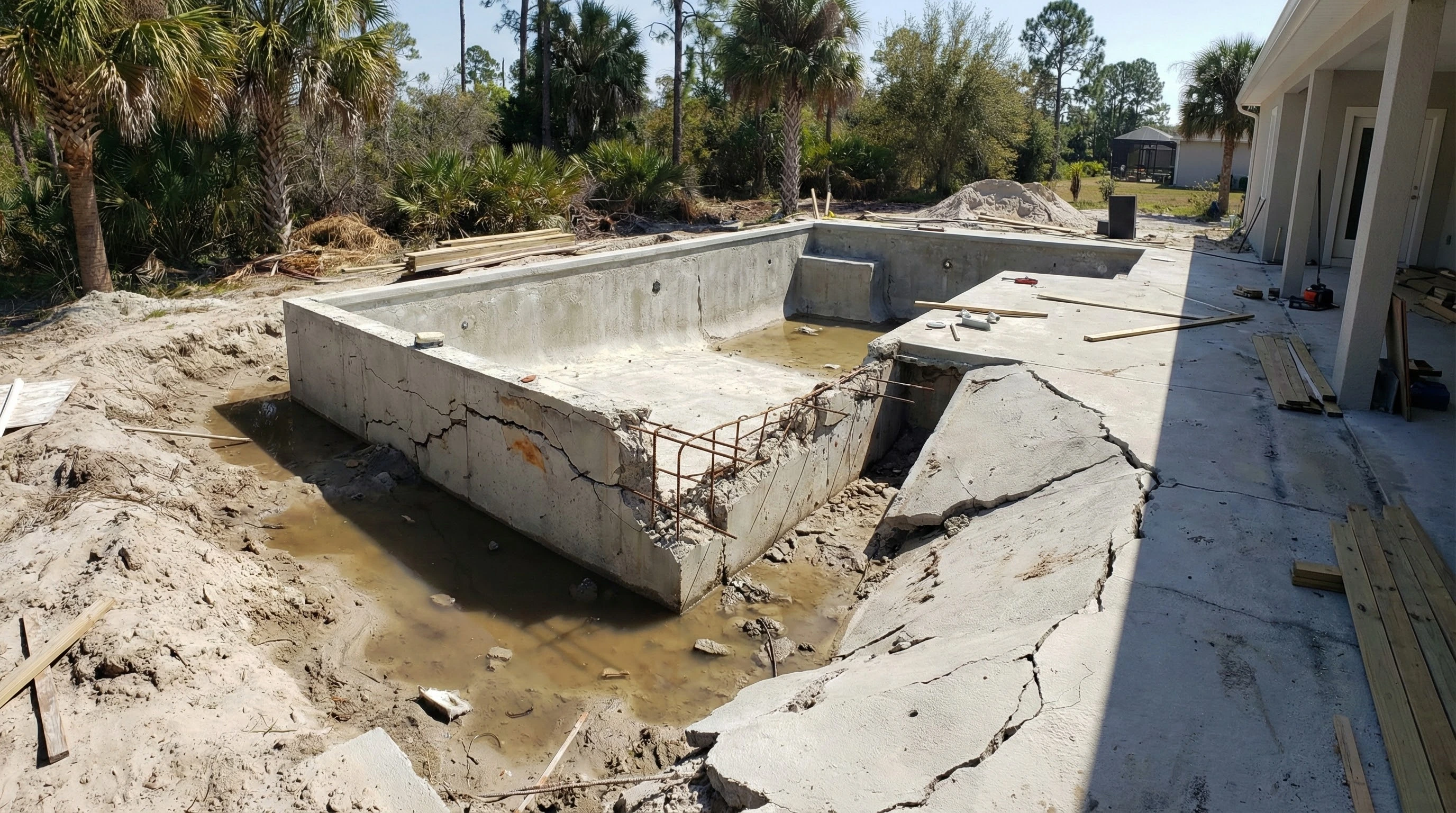
In a Miami case, a pool sank 18 inches in the first year due to skipped preparation. This caused structural pool cracks and hydrostatic pressure issues. Always verify site readiness to dodge these pool installation mistakes.
Skipping geotechnical surveys links to most pool structural failures in Florida. These tests cost little compared to total build expenses. They reveal soil compaction issues and hidden risks.
Required tests include Standard Penetration Test (SPT) to check depth strength, CBR test for bearing capacity, and groundwater measurements. In one Orlando example, a gunite pool with low CBR collapsed under load. Proper testing prevents such gunite pool defects.
Test TypeDescriptionAvg CostBasicSimple soil probe and compaction check$800ComprehensiveFull SPT, CBR, and groundwater analysis$2,500
These steps catch sinkhole risks Florida and high water table problems. Experts recommend them for all Florida swimming pools to ensure longevity.
Design flaws account for a significant portion of Florida pool litigation cases according to the Florida Department of Business & Professional Regulation. In Florida, builders often overlook FBC-R4501 codes, HOA restrictions, and utility locates via the 811 service. These pool construction mistakes lead to costly fixes and safety issues.
Common Florida pool errors include skipping soil tests for sinkhole risks and high water tables. A solid planning checklist covers yard measurements, budget reviews, contractor licenses, permit timelines, neighbor consultations, drainage plans, equipment zoning, and material selections. Experts recommend this list to avoid inground pool failures.
Many projects rush design without considering hurricane pool damage or pool enclosure needs. Review local zoning for setbacks and screen heights early. Proper planning prevents pool permit mistakes and ensures smooth installation.
Address pool deck problems in initial sketches, like paver spacing for expansion. Integrate landscaping to dodge palm tree root damage. Thoughtful design cuts long-term swimming pool pitfalls.
FBC violations void many pool warranties; common issues include missing barrier codes like 4-foot fences and self-closing gates per R4501.17. Florida builders face fines for these pool fence code violations. Non-compliance risks child safety and insurance claim denials.
Key requirements demand attention to details. Use this table for critical FBC rules:
RequirementDescriptionBarrier height48 inches minimum around poolGate latch54 inches maximum height, self-latchingPool alarmAudio alert on doors leading to pool areaSpa spillover drain slope1:48 ratio to prevent standing waterEquipment pad clearance3 feet from pool edgeBonding gridNEC 680 standards for electrical safety
A simple permit flowchart starts with site plan submission, utility locate, inspection scheduling, and final approval. In one Tampa case, a pool needed an $18,000 redo for gate violations. Always verify Florida pool regulations before breaking ground.
Skipping pool bonding violations causes electrical hazards. Train crews on IRC pool codes to pass inspections. Proactive code checks avoid pool inspection fails and structural issues.
Oversized pools raise heating costs, as larger surface areas demand more energy. For a family of four, aim for 13x26-foot pools at 338 square feet, not 16x32-foot designs at 512 square feet. Proper sizing matches bather load and turnover needs.
Calculate based on 8 gallons per minute per person and 6-8 hour turnover rates. Factor in solar heating covering 75% of surface area. Common errors hit negative edge gutters with undersized 3-inch weirs and beach entries over 15% slope.
Check gallonage for common shapes:
ShapeDimensionsApprox. GallonsRectangle13x26x4.5'13,000Oval15x30x4.5'15,500Kidney14x28x4.5'14,200Lazy L12x24+8x16x4.5'12,800Freeform15x30x4.5'16,000
Undersized returns cause pool circulation failures; misplaced jets lead to dead spots. Balance with skimmer installation for even flow. Right sizing prevents pool leak issues from strained plumbing.
Florida pools leak avg 1,500 gal/week from waterproofing failures, costing $3,200/yr per LeakTrac study. These pool leak issues stem from poor choices in shell types and inadequate sealing. Homeowners face rising water bills and structural damage in humid conditions.
Three main shell types dominate Florida swimming pools. Gunite shells require a minimum 2.5-inch thickness for durability against soil shifts. Fiberglass shells suffer from gelcoat holidays, tiny voids that allow water intrusion over time.
Vinyl liner pools use liners just 0.20-0.30 mil thick, prone to tears from debris or improper tension. Experts recommend ASTM C1581 testing for plaster to detect absorption rates early. Skipping this leads to common pool problems like cracking and delamination.
Address these inground pool failures by hiring builders who verify shell integrity before finishing. Proper waterproofing prevents concrete pool cracks and extends pool life in Florida's high water table. Regular inspections catch issues before they escalate.
Vinyl liner wrinkles from stapling <1/4 inch from seam cause leaks within Year 1. These pool installation mistakes create weak points where water escapes under pressure. Florida pool errors like this lead to frequent replacements and water loss.
Follow strict installation specs for lasting results. Use 1/8-inch minimum wall foam to cushion the liner. Ensure 1-1.5 inch coping overlap to secure edges firmly.
Test thoroughly with a 24-hour vacuum at 4 psi to confirm no leaks. Heat weld seams at 800 degreesF using tools like the Vinyl Wizard heat gun or bucket test kit. These steps prevent swimming pool pitfalls from poor adhesion.
Here is a 12-point inspection checklist for liner jobs:
In one Orlando case, a liner pulled off walls from vacuum loss during a storm. This pool builder error cost thousands in repairs. Adhering to specs avoids such vinyl liner pool disasters in Florida's wet climate.
Undersized equipment causes many service calls in Florida pools. Proper hydraulic design helps cut energy costs over time. This avoids common pool construction mistakes like poor circulation.
Pumps and filters often fail due to wrong sizing for pool volume. Florida's ASHRAE 90.1 energy codes push for efficient systems. Variable speed pumps meet these rules while handling high humidity loads.
Schedule 40 PVC sizing matters for flow rates. Undersized pipes raise head loss and strain equipment. Experts recommend matching pipe diameter to pump curves for steady performance.
Filter square footage should handle 1.5 gpm per sqft maximum. This prevents debris buildup and maintains clear water. Proper setup reduces pool pump failures and filter system errors in inground pool failures.
The Pentair 011518 pump at 1.5HP for a 20x40 pool creates dead spots. It needs a 2.7HP variable speed pump per hydraulic calculations. This fixes poor pool plumbing and circulation failures.
Pump curves show required horsepower for total dynamic head, averaging 60ft in typical setups. High head loss from multiple elbows at 2.5ft per 90 degrees bend cuts flow. Oversizing filters avoids clogging in Florida swimming pools.
Pool Size (sqft)GPM RequiredPump HP (VSP)Filter Sqft (DE)400901.5486001352.0728001802.796
Variable speed pumps save significant energy compared to single speed models. They adjust to demand, easing pool installation mistakes. Check TDH for your setup to prevent pump failures.
Too many elbows, averaging 12 versus optimal 6, add head loss and cut flow in plumbing runs. This common pool builder error strains pumps in Florida pools. Fewer bends keep velocity in check.
Follow these pipe layout rules to avoid poor pool plumbing:
Keep suction velocity under 6fps and return under 8fps. A Sarasota pool replumbed with better routing saved on electricity. Optimal paths boost circulation and fix skimmer installation wrong issues.
Poor routing leads to dead spots and algae growth causes. Place return jets for even flow across the pool. This prevents inground pool failures from inadequate pool drainage.
ADA violations and slip hazards from poor decking cause many pool lawsuits. Florida pool errors like these lead to pool deck problems that compromise safety and invite legal issues. Builders often overlook key standards, resulting in costly fixes.
Florida Building Code requires specific slopes to direct water away from the pool. Expansion joints prevent cracking in concrete decks from heat and settling. Coping must meet standards for secure attachment and slip resistance.
Reference ASTM F462 for measuring slip resistance on wet surfaces. Common mistakes include ignoring these specs, leading to puddled water on travertine decks after rain. Proper installation avoids inground pool failures and enhances longevity.
Experts recommend checking FBC slope requirements during pool permit stages. Neglect here causes algae growth and structural issues in Florida swimming pools. Always verify coping standards to prevent pool installation mistakes.
Decks with less than 1/4 inch per 12 inches slope pond water, growing algae faster. This improper pool drainage is a top pool construction mistake in Florida. Puddles create slip hazards and damage surfaces.
FBC specs demand 1/4":12 slope on decks away from coping for quick runoff. Walkways need 1/8":12 slope, with drains every 400 square feet. Pavers fail without a 1-inch base, causing settlement and pool deck problems.
A puddled travertine deck after rain shows failure signs like standing water and discoloration. These swimming pool pitfalls lead to algae and pool leak issues. Correct sloping prevents pool builder errors and ensures compliance.