Key differences between residential and commercial pool construction in Florida, including codes, costs, timelines, and requirements.
Did you know Florida's pool construction regulations differ dramatically between residential and commercial projects, potentially saving or costing thousands?
With stringent building codes, health mandates, and hurricane-prone challenges, choosing the right path is crucial for homeowners and businesses alike.
Explore regulatory differences, design variations, costs, timelines, maintenance, insurance, and more to make informed decisions tailored to the Sunshine State.
Residential pools require simpler permits while commercial pools face extensive health department oversight under Florida Building Code 2023 Edition. Homeowners building an inground concrete pool often deal with county-level approvals. Commercial projects, like hotel pools or apartment pools, involve multiple agencies.
Commercial pools trigger far more regulatory reviews due to public safety concerns. Expect involvement from local building departments, state health officials, and sometimes fire marshals. Residential pool construction focuses on basic zoning laws and HOA rules.
Key differences appear in permitting processes, inspection frequency, and compliance standards. Commercial sites need bather load calculations and ADA compliance plans from the start. Residential builds prioritize pool safety features like fences and gates.
Florida's coastal construction rules add layers for both, but commercial pools demand engineering reports for wind load ratings and flood zones. Pool builders must coordinate soil testing early. This ensures hurricane-resistant designs in areas like Miami-Dade.
Residential pools need county building permits while commercial require state health approvals plus engineering stamps. Costs for residential often range lower, covering basic pool permit fees. Commercial projects involve higher expenses due to added scrutiny.
Review times vary by location, with Miami-Dade High Velocity Hurricane Zone standards demanding extra documentation. Palm Beach County may process residential faster with fewer hurdles. Commercial approvals take longer due to multi-agency checks.
AspectResidentialCommercialPermit CostLower county feesHigher with engineeringReview TimeWeeks to monthsMonths with state inputRequired DocumentsSite plan, plot surveyPlus structural report, bather loadInspections NeededFoundation, electrical, finalMultiple plus health checks
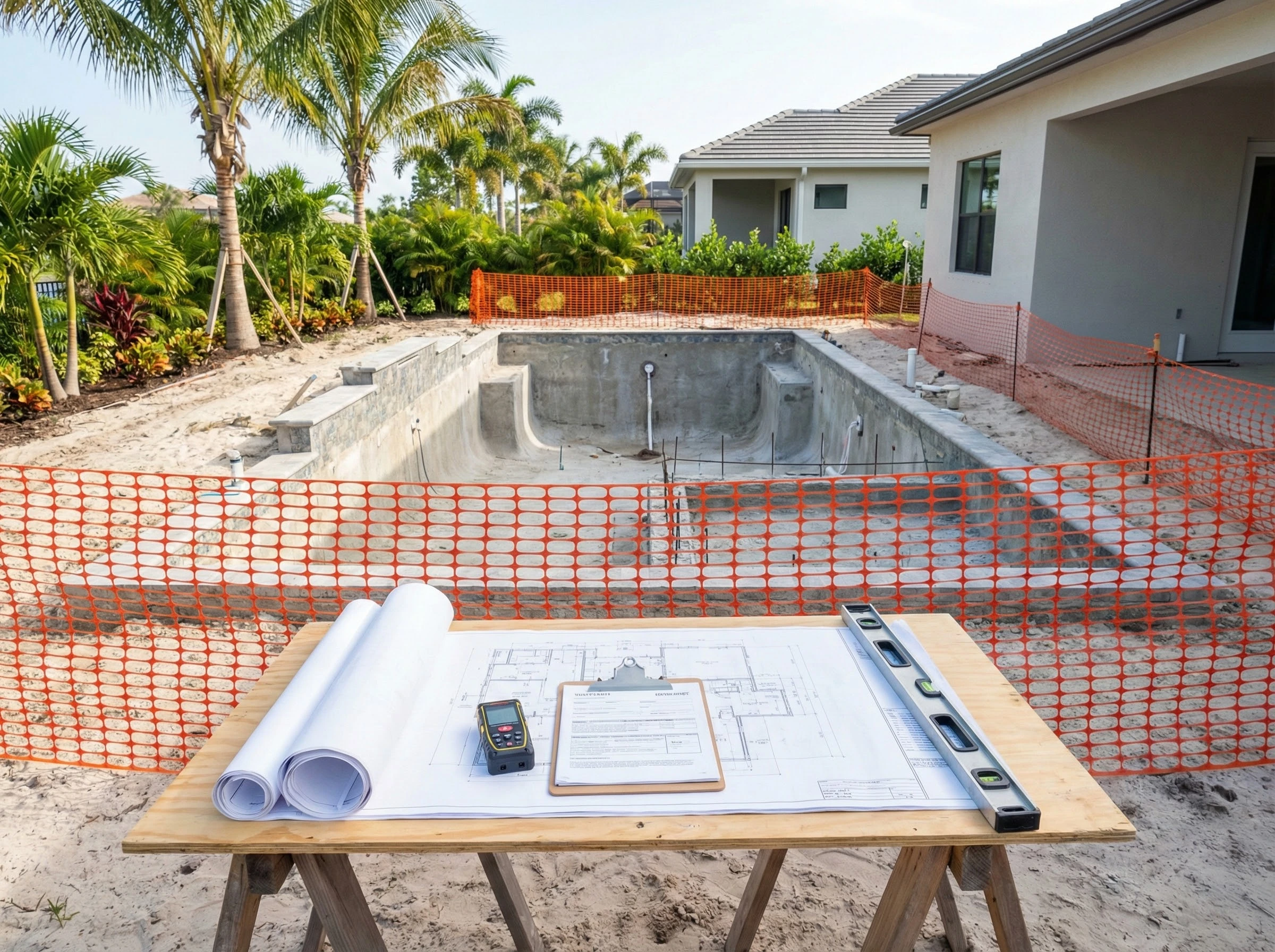
Commercial pools list specific documents like structural engineering report and bather load calculations. Residential skips these for simpler pool designs. Always check local codes for pool excavation and rebar inspections.
Florida health departments mandate commercial pools maintain strict chemical balances while residential follow basic guidelines. Commercial requires daily ORP and pH logs per 2022 Florida Administrative Code 64E-9. Residential owners test water periodically for safety.
Commercial setups need lifeguard certification for public pools and ADA lifts for accessibility. Reference DOH Table 3-1 for chemical limits on free chlorine and other levels. Residential focuses on pool maintenance like calcium hardness checks.
This checklist ensures commercial inspection compliance for condo pools or public facilities. Residential avoids such rigor but still needs pool fence and gate checks. Pool contractors handle startup chemicals and ongoing service contracts.
Commercial pools average 1,500-5,000 sq ft with ADA requirements while residential pools range 300-800 sq ft for family use. Commercial designs prioritize capacity and safety codes, often accommodating 15+ bathers simultaneously per Florida code. Residential options focus on lifestyle features tailored to homeowners.
In Florida, commercial pool construction demands larger surfaces for hotels, apartments, or public venues to handle crowds safely. These pools include deeper ends and strict bather load calculations based on 15 sq ft per swimmer. Residential pools emphasize relaxation with custom shapes like freeform or geometric designs.
Key differences arise in pool design and materials. Commercial builds use durable concrete or gunite for heavy use, while residential choices include fiberglass or vinyl liner pools. Florida's building codes influence both, but commercial projects face more rigorous health department oversight.
Owners consider zoning laws and pool permits early. Residential pools suit family fun with shallow ends, while commercial ones require lifeguard stations over certain sizes. This contrast affects excavation, rebar, and pool deck planning from the start.
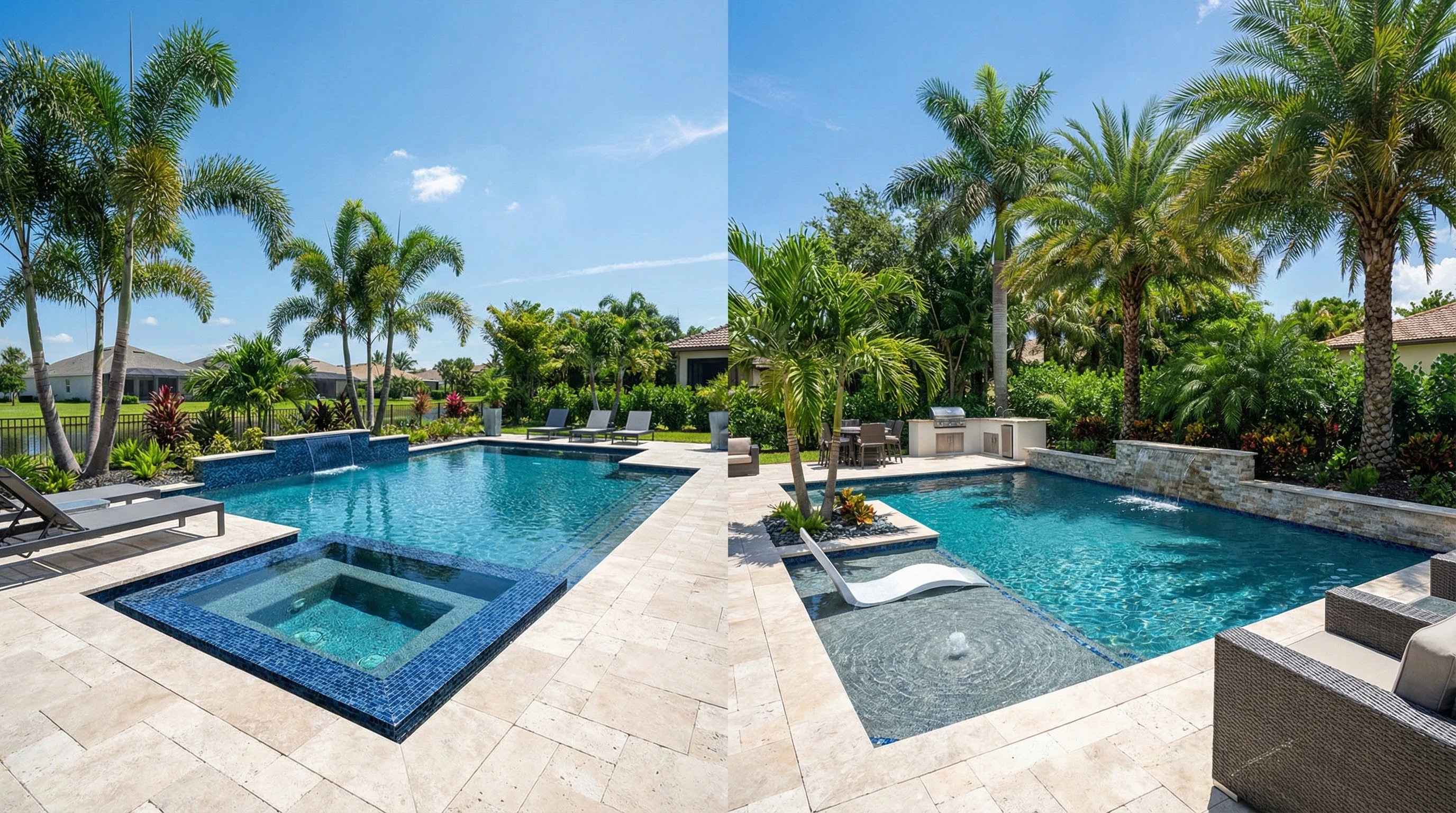
Popular residential features include tanning ledges and zero-entry designs for child safety. These elements enhance family pools in Florida homes. Experts recommend them for easy access and relaxation.
Common additions boost enjoyment and pool safety. Tanning ledges offer shallow lounging areas, while waterfalls create a tropical vibe. Spa spillovers integrate hot tubs seamlessly for year-round use.
Costs vary by pool builder and location, such as waterfront property versus inland. Pair features with pool automation for easy control via apps. Always check HOA rules for approvals.
Commercial pools require 10ft minimum depth for diving boards plus ADA-compliant entry systems per Florida Statute 514.0315. These rules ensure access for all users in public settings. Designs prioritize durability and crowd management.
Minimum requirements differ by venue type. Hotels need one pool per 100 rooms, apartments one per 50 units, and public pools demand lifeguards over 2,000 sq ft. Circulation systems must achieve an 8-hour turnover for clean water.
Venue TypePool RequirementHotel1 pool per 100 roomsApartment1 pool per 50 unitsPublicLifeguards required over 2,000 sq ft
Bather load uses 15 sq ft per swimmer for capacity planning. Features like slides or lap lanes suit fitness pools. Commercial inspection by health departments verifies compliance.
Florida's coastal construction adds wind load ratings and impact glass for enclosures. Integrate pool pumps, filters, and chemical feed for ORP monitoring. Pool contractors coordinate permits and liability insurance upfront.
Commercial pools favor gunite concrete for custom sizing while residential sees more fiberglass pools for faster installs. In Florida, pool construction choices depend on durability against hurricanes and local soil. Builders select materials based on residential pool or commercial pool needs.
Gunite concrete offers flexibility for shapes like infinity edges or lap pools in hotels. Fiberglass suits family pools with quick setup and low maintenance. Vinyl liner and polymer options fit budgets but vary in Florida suitability due to limestone bedrock.
The table below compares key materials on lifespan, cost per sq ft, and commercial use patterns. IBHS hurricane testing data shows gunite and fiberglass holding up best in high winds. Experts recommend soil testing for limestone bedrock compatibility before excavation.
MaterialCommercial UseLifespanCost/sq ftFlorida SuitabilityGunite ConcretePrimary choice for public pools, hotels50+ years with resurfacing$100-$200Excellent; anchors well in limestone bedrock, hurricane resistant per IBHS testsFiberglassLess common in commercial; 40% residential25-30 years$50-$100Good for sandy soil; pre-molded shells avoid bedrock issuesVinyl LinerRare in commercial due to wear7-15 years per liner$40-$80Fair; liners tear on rocky Florida groundwater, frequent replacements neededPolymerModular for condos, apartments20-40 years$60-$120Strong in coastal areas; resists limestone cracks but check for flood zones
Florida's limestone bedrock demands careful pool excavation. Gunite with rebar bonds securely, ideal for commercial inspection and ADA compliance. Residential builders often pick fiberglass to cut construction timeline amid monsoon season risks.
Commercial pools cost $95-150 per sq ft versus residential pools at $65-110 per sq ft due to engineering and safety requirements. In general, commercial pool construction runs 2-3 times higher per square foot than residential builds. This stems from commercial-grade equipment and stricter permitting in Florida.
Residential pools often suit family pools or party pools with features like tanning ledges or spas. Commercial projects, such as hotel pools or condo pools, demand ADA compliance and higher bather loads. Pool builders factor in these needs during pool design.
Florida's regional variations affect costs, with Miami seeing higher prices from coastal construction rules. Orlando serves as a baseline for inland pools. Experts recommend soil testing early to avoid surprises in sandy soil or limestone bedrock.
Pool financing options differ too, with commercial loans covering revenue potential from public use. Residential owners focus on ROI through home value boosts. Always consult a pool contractor for a custom pool budget.
Average 2024 Florida residential pool costs $75,000 for 400 sq ft versus a commercial hotel pool at $350,000 for 2,000 sq ft. These figures draw from the Pool & Spa News cost index, reflecting material and labor trends. Pool excavation and shell work drive much of the difference.
Breakdowns reveal why commercial pools cost more across categories like equipment and permitting. Residential builds use standard fiberglass pools or concrete pools, while commercial ones require reinforced gunite or shotcrete shells. Miami adds about 25% to costs over Orlando baseline due to Miami Dade code.
CategoryResidential (per sq ft)Commercial (per sq ft)NotesExcavation$10-15$20-30Deeper digs for lap pools or public pools; groundwater pumps extra in flood zonesShell$25-35$45-65Rebar and gunite thicker for commercial; engineering report requiredEquipment$15-20$25-35Variable speed pumps, saltwater chlorinators standard; commercial needs ORP monitoringDecking$10-15$15-25Pavers or stamped concrete; travertine coping common in FloridaPermitting$3-5$10-15Health department, DCF approval for commercial; zoning laws stricter
Use this table to compare inground pool options with your local pool builder. Factor in features like pool fence or screen enclosures for hurricane resistance. Dry season construction cuts labor costs in monsoon-prone areas.
Residential pools complete in 8-12 weeks versus commercial pools at 20-36 weeks due to phased health department inspections. This difference stems from stricter oversight for public safety in Florida. Homeowners enjoy quicker access to their inground pool, while commercial projects face delays from multiple approvals.
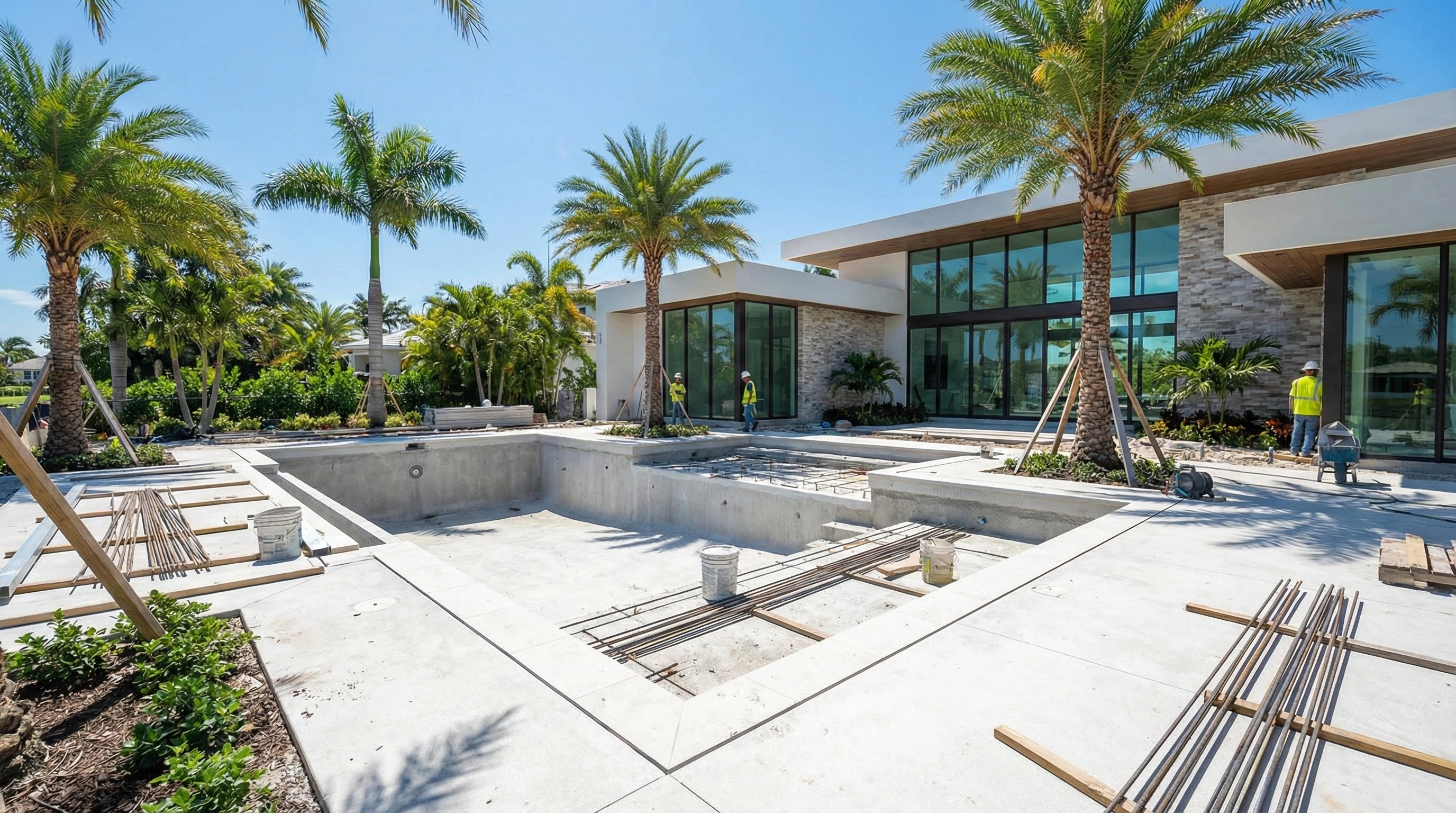
Construction timelines vary by pool type and site conditions. Residential builds move steadily through excavation, gunite, and finishing stages. Commercial pools require extra time for engineering reports and pool inspections to meet health department standards.
Weather plays a role in Florida pool construction. Dry season work speeds up both residential and commercial timelines by avoiding monsoon delays. Pool contractors coordinate subcontractors carefully to stay on track.
Labor demands differ significantly between residential and commercial pool projects. Residential jobs use fewer trades, keeping costs and timelines shorter. Commercial builds involve more coordination for compliance with building codes and zoning laws.
PhaseResidential TimelineCommercial TimelineExcavation and RebarWeeks 1-2Weeks 1-4 (includes soil testing)Gunite and PlumbingWeeks 3-5Weeks 5-8 (plus initial inspections)Finishing and DeckWeeks 6-8Weeks 9-16 (deck, coping, tile)Final Inspections and OpenWeeks 9-12Weeks 17-36 (phased health dept checks)
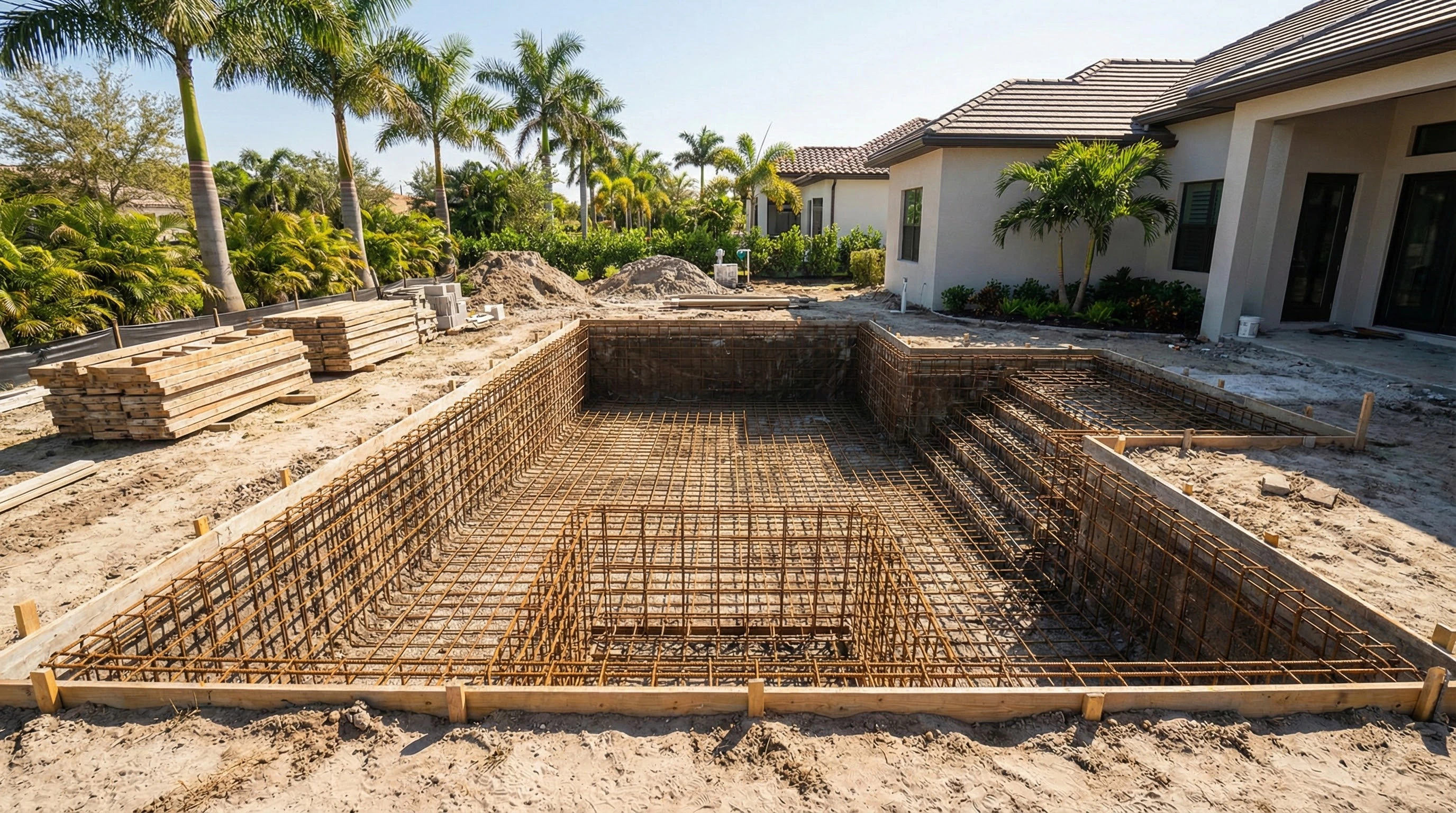
Residential pool construction typically requires 4 key subcontractor trades: excavators for digging, rebar specialists for reinforcement, gunite crews for the shell, and finishers for plaster and deck work. This streamlined approach suits family pools or spa integrations. Pool builders handle coordination efficiently.
Commercial pools demand 7 or more subcontractor trades due to complexity and regulations. Extra trades ensure ADA compliance, lifeguard requirements, and bather load safety for hotel pools or condo pools. Florida's health department mandates this for public use.
For residential projects, focus on a turnkey pool builder to minimize subcontractor overlaps. Commercial jobs benefit from experienced pool contractors who navigate DCF approval and Miami Dade code. Proper sequencing prevents costly rework during backfill or pool drainage phases.
Commercial pools require daily chemical logging with automatic feeders while residential needs weekly manual testing. This difference stems from Florida's strict health department rules for public safety in high-bather-load settings like hotel pools or apartment pools. Residential pool owners enjoy simpler routines suited to family pools or spas.
For commercial pool maintenance, operators must use ORP controllers to monitor water quality continuously. This ensures proper disinfection levels amid constant use by swimmers. Residential setups rely on basic test kits for pH and chlorine checks.
Florida DOH provides a detailed commercial maintenance checklist covering everything from bather load limits to lifeguard requirements. Pool service contracts often include these steps for condo pools or public pools. Homeowners focus on seasonal tasks like pool resurfacing or acid washes.
Key distinctions appear in testing protocols, equipment needs, and documentation. Commercial sites demand certified staff and long-term records to pass inspections. Residential maintenance supports energy efficient pools with variable speed pumps and smart controls.
RequirementCommercial PoolResidential PoolTesting FrequencyDaily chemical tests with ORP monitoringWeekly manual checksEquipment RequiredORP controller and automatic feeders mandatoryBasic test kit sufficientStaff CertificationCertified pool operator requiredNo certification neededRecord Retention3-year logs for health department reviewOptional personal records
This table highlights pool maintenance differences critical during pool construction planning. Commercial projects factor in these costs for pool automation and chemical feed systems. Residential builds prioritize low-maintenance features like saltwater chlorinators.
Commercial pool liability insurance averages $15,000/year versus residential $1,200 due to higher bather load exposure. Residential pools face lower risks from family use, while commercial pools like those in condos or hotels serve many swimmers daily. This cost gap reflects Florida's strict pool safety rules.
In Florida, commercial pool construction demands at least $1 million in coverage, often more for public pools or apartment complexes. Residential policies cover basic incidents, but commercial ones include bather load and public access risks. Owners must review policies before hiring a pool contractor.
A real Florida case involved a 2022 condo pool lawsuit settled for $2.3 million over a missing gate latch that allowed unsupervised child access. This highlights how small oversights lead to massive claims in commercial settings. Proper installation of pool fences and gates prevents such tragedies.
Both residential and commercial pools require pool insurance tailored to location, like coastal areas with hurricane risks. Commercial operators face annual safety audits by the health department, while homeowners focus on basic compliance. Consulting an agent early in pool design saves headaches later.
Costs for residential pool insurance stay lower because of limited users, often adding just hundreds to homeowners policies. Commercial pools, serving hotels or condos, see premiums climb from constant public use and higher claim potential. Florida's pool permit process factors in these expenses upfront.
Expect annual renewals to rise with features like waterfalls or slide installation in commercial designs, increasing liability. Residential inground pools with simple pool fencing keep costs down compared to elaborate commercial setups. Shop multiple insurers for the best fit during construction planning.
Factors like pool capacity and location in flood zones drive commercial rates higher. A family fiberglass pool might cost little extra, but a public lap pool demands comprehensive coverage. Budget this into your total pool construction expenses from day one.
Commercial pools require minimum $1 million limits to meet health department standards and protect against large lawsuits. Residential coverage often suffices at lower thresholds for private use, focusing on accidents like slips on pool decks. Exceeding limits leaves owners personally liable in Florida.
Umbrella policies extend protection for both, but commercial needs more due to ADA compliance and bather volume. A condo pool without adequate limits risks bankruptcy from claims involving pool drownings. Review limits annually as pool usage changes.
Coverage must include pool equipment like pumps and heaters, plus guest injuries. Commercial operators cover lifeguard oversight, absent in residential cases. Tailor policies to your pool type, from vinyl liner to concrete, for full peace of mind.
Commercial pools undergo annual safety audits mandated by Florida's health department, checking gates, fences, and water quality. Residential owners handle basic pool inspections during permitting but skip routine commercial scrutiny. Non-compliance leads to fines or closures.
Key extras include lifeguard requirements for public pools and DCF approval for community facilities. HOA rules may add layers for condo pools, demanding specific pool covers or enclosures. Document everything to satisfy insurers and regulators.
These steps reduce risks and lower premiums over time for any Florida pool.
Florida's High Velocity Hurricane Zones require Miami-Dade NOA certification for all commercial pool equipment. This ensures gear like pool pumps and pool filters withstand extreme conditions. Residential pools face similar rules in coastal areas.
Hurricane wind loads demand designs up to 170mph ratings for both residential pools and commercial pools. Pool builders use reinforced rebar and gunite shells to meet these standards. Engineering reports verify compliance during pool permitting.
Other issues include limestone bedrock excavation, which raises costs for inground pool digs. Flood zone elevation mandates lifting decks and coping above base flood levels. Groundwater dewatering needs sump pumps during construction.
Solutions involve corrosion-resistant materials like epoxy-coated rebar for saltwater pools. Schedule work in dry season to avoid monsoon season delays. Always secure an engineering report for inspections and warranties.
In Florida pool construction, hurricane wind loads require 170mph design standards in high-velocity zones. Commercial pools at hotels or condos need Miami-Dade NOA certified pool heaters and pool automation systems. Residential builders match this for hurricane resistant concrete pools.
Engineers calculate wind load ratings for pool decks, enclosures, and screen enclosures. Use impact glass enclosures or retractable covers for added protection. This prevents damage from flying debris in storms.
An engineering report details rebar spacing and shotcrete thickness. It supports pool permit applications under Miami-Dade code. Experts recommend early structural reviews to avoid redesigns.
Limestone bedrock common in Florida increases pool excavation costs for fiberglass or vinyl liner pools. Heavy equipment blasts or cores rock, adding time to the construction timeline. Inland sites often hit this layer sooner than waterfront properties.
Solutions include soil testing before bidding to predict challenges. Pool contractors use specialized drills for precise digs. Backfill with compactable material ensures stable pool shells.
Engineering reports assess bedrock depth and recommend foundation adjustments. This applies to lap pools or spas needing deep ends. Plan for higher material costs and labor in budgets.
Flood zone rules in Florida demand elevated pool decks and coping for inground pools. Coastal construction codes set minimum heights above base flood elevation. Commercial public pools face stricter health department oversight.
Build with stamped concrete decks or pavers on raised footings. Integrate pool drainage and sump pumps for groundwater control. Zero entry designs adapt well to these elevations.
Secure engineering reports for variance permits if setbacks conflict. This ensures pool safety and compliance with zoning laws. Residential family pools benefit from these proactive steps.
High groundwater in Florida complicates excavation for concrete pools. Constant water inflow requires dewatering with pumps during digs. Sandy soil sites worsen the issue near waterfront properties.
Pool builders install temporary wells or sump pits for dry work areas. Monitor levels to protect rebar placement and gunite application. This prevents structural weaknesses in the shell.
Engineering reports predict groundwater impact and specify pump capacities. Time digs for dry season construction to minimize needs. Commercial apartment pools often need permanent drainage solutions.
Salty air and saltwater pools demand corrosion-resistant materials in Florida. Use stainless steel for pool plumbing and electrical bonding grids. Fiberglass shells resist this better than vinyl liner pools.
Apply epoxy coatings on rebar and choose pebble finish plasters with inhibitors. LED pool lights and variable speed pumps last longer here. Commercial hotel pools prioritize durable gear for high bather loads.
Engineering reports specify material specs for warranties. Regular pool maintenance like acid washes extends life. This cuts long-term costs for both residential and commercial setups.
Monsoon season brings heavy rains that delay pool construction timelines. Wet soil halts excavation and backfill for geometric or freeform pools. Subcontractor coordination suffers with flooded sites.
Schedule dry season builds from November to April for smoother progress. Use tarps and drainage plans during unexpected downpours. Pool contractors protect open digs to avoid rework.
Engineering reports include weather contingency timelines. This helps with HOA approvals and permits. Commercial projects like condo pools plan buffers for revenue timelines.